 Upload BOM
 Cart (
 What Is a Bolometer? How It Works, Types and Applications
Author:admin Date: 2026-02-02 09:54 Views:58
Introduction
A bolometer is a highly sensitive devices used in measuring the power of incident magnetic radiation. Ever since its invention in 1878, the bolometer has been used in a wide range of functions including extremely sensitive thermal detector or thermometer.
Expect to come across bolometers in astronomy, thermal imaging, microwave engineering, and particle physics. It is all due to its high sensitivity. Let learn more about bolometers below in terms of how they work, the types, applications, and much more.
How a Bolometer Works
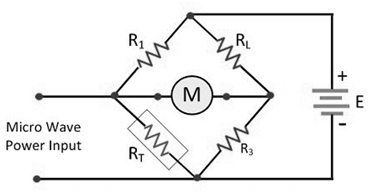
Now that you know more about the bolometer definition, let us look at how it works.
A bolometer works by converting the incident electromagnetic radiation into thermal energy. This alters the electrical resistance of the sensing material. The change in resistance is measure precisely to determine the intensity or power of the radiation.
The Step-by-Step Process
- Radiation such as RF energy, microwaves, and infrared strikes the absorptive material. This is often a thin metal layer or a blackened foil to help maximize heat absorption.
- The absorbed energy quickly raises the temperature of the sensing element to above that of a stable thermal reservoir or heat sink.
- The temperature rise causes a corresponding change in the material’s electrical resistance. Metals such as platinum have a positive temperature coefficient. The resistance rises as they are heated.
Semiconductors have a negative temperature coefficient. This means the resistance decreases as they heat up. - Signal detection is done by the sensiting element integrated into the electrical circuit. A Wheatstone Bridge is used for this application most of the time.
The bridge is initially balanced so that no corrent goes through the galvanometer. When the radiation hits the sensor, the resistance changes, which unbalances the bridge.
The resulting voltage difference is then amplified and measured as a signal proportional to the incident radiation power.
Advanced Operation Methods
- Modulation can be done to improve the sensitivity and reduce background noise. The modulation causes the sensiting element to cycle between the relaxation and excitation states.
- Electrical power is fed back into the sensor in high precision systems to maintain a constant temperature. This amount of electrical power needed to keep the temperature stable is directly proportional to the absorbed radiation power.
- You can also get cryogenic cooling being used to detect the extremely faint signals. Operating at near absolute zero makes the bolometers minimize thermal noise from the environment.
Types of Bolometers
Bolometers for sale can be categorized based on the material, structural design, specific sensitivities, cooling requirements, and spectral ranges.
Based on Material
Semiconductor Bolometers
These are the most common type in the market. They are made using materials such as silicon or germanium. They tend to have a high negative temperature coefficient. This means their resistance drops significantly as they heat up.
Metal Bolometers
These are thin metal wires or films mostly made of platinum. These are stable, but can generally be less sensitive compared to semiconductor versions.
Superconducting Bolometers
Use materials cooled to their transition edge. In this case, a tiny temperature change leads to a massive spike in the resistance. Such bolometers are vital for when working with ultra-faint signals in deep space astronomy.
Based on Structural Design
Microbolometers
These are tinry sensors arranged in large arrays for thermal imaging cameras. They would be made of materials such as amorphous silicon or vanadium oxide.
Hot-Electron Bolometers
These operate by heating only the electrons in the material rather than heating the entire lattice. Such a process allows for extremely fast response times suitable for terahertz radiation dection.
Composite Bolometers
Some boloeters use separate absorption and sensing functions. This is through having a specilized material such as sapphire disk for absorption and small thermistor sensing to further maximize sensitivity.
Based on Cooling Requirements
Uncooled Bolometers
These operate at room temperature and the most cost effective options in the market. They are largely used in consumer thermal cameras, security, and automotive night vision.
Cooled (Cyrogenic) Bolometers
They require liquid helium or mechanical cryocoolers to reach temperatures near absolute zero. Such operating temperatures minimizes the thermal noise, meaning you can also detect the faintest possible signals.
Key Performance Parameters of a Bolometer
The performance parameters are evaluated through several standarized metrics which quantify the sensitivity, speed, and efficiency in converting radiation into electrical signals. Here are the key performance parameters of a bolometer.
Responsivity
This measures the detectors efficiency at converting incident radiant power into electrical signal. It is measured in volts per watt or amperes per watt.
This is directly proportional to the temperature coefficient of resistance and inversely proportional to thermal conductance.
Noise Equivalent Power (NEP)
This is the amount of incident radiation power needed to produce an output signal that is equal to the detector’s internal noise.
Having a lower NEP indicates that the detector is more sensitive and can measure weaker signals.
Specific Detectivity
This is a normalized measure of sensitivity that allows for comparison between detectors of different bandwidths and sizes.
Thermal Time Constant
This quantifies the detector’s speed or response time. It is the time required for the sensor to reach -63.2% of its final temperature change after a step change in the incident radiation.
Its value ranges from milliseconds for uncooled microbolometers to microseconds or even faster for the hot-electron bolometers.
Applications of Bolometers
Bolometers are foundational to high-precision thermal detection across different industries. Here is what to expect as applications of bolometers.
Aerospace and Defence
This sector remains a primary user of the bolometer technology. This is especially for the uncooled microbolometers.
You will find bolometers in handheld thermal cameras and goggles soldiers use to navigate and identify targets in smoke or complete darkness.
By using infrared homing systems, the bolometers are used in missible guidance. This is where the missibles are able to track the heat signatures of aircraft and other targets.
Bolomters are also deployed on drones and fixed panoramic platforms for thermal monitoring autonomously.
Astronomy and Space Exploration
Bolometers are essential for detecting faint energy sources in the universe. For example, the comic microwave background is a high-sensitivity superconducting bolometer that allow telescopes to map the afterglow of the Big Bag.
You can also find them useful for deep space observation. Instruments on the James Webb Space Telescope commonly use bolometers to see through the cosmic dust and observe the formation of the galaxies and stars.
Planetary missions also use these sensors on the platenary probes to measure the surface temperatures of planets and moons.
Automotive Industry
The rise of the Advanced Driver Assistance Systems has made it possible to use bolometers in consumer vehicles. For example, you now have night vision and pedestrian detection in vehicles.
The thermal cameras allow cars to detect pedestrians, stalled vehicles, and animals in low-visibility conditions.
Bolometers are now being used as redundant sensor layers in autonomous driving. They provide critical data in rainy or foggy weather when LiDAR and visible cameras may fail.
Healthcare and Industrial Safety
Miniaturization and cost reduction have further expanded the use of bolometers in civilian sectors.
We can now find non-invasive thermal imaging and is used in fever screening specially in airports.
Industries also use bolometers to detect overheating in electrical panels or mechanical equipment before failure occurs.
The same can also be used in environmental monitoring. For example, in early detection of forest fires and also monitoring radiation levels in high-risk areas such as fusion reactors.
Advantages and Limitations of Bolometers
Advantages of Bolometers
- No cooling is required for the uncooled bolometers
- Bolometers are significantly cheaper, lighter, and smaller to be used in tight spaces
- They can detect a vast range of wavelengths as they measure heat rather than specific photon energies
- Offer high reliability since there are no moving parts. This means they also have a higher mean time between failures. Less maintenance is required to keep them running.
- Low power consumption is possible as modern microbolometers use very little power. You should find them ideal for battery-operated devices.
Limitations of Bolometers
- Since bolometers rely on the physical temperature change, they can sometimes be slower.
- Expect some thermal drift and self heating with bolomters
- Bolometer need massive and expensive lenses for detecting over a long range target.
Bolometer vs Photodiode vs Pyroelectric Detector: Key Differences
Bolometers measure the steady-state power of incident raidation by converting it into heat. This changes the detector’s electrical resistance.
Photodiods are quantum detectors. This means they convert individual photons directly into electron-hole pairs, which creates a measurable electrical current.
Pyroelectric detectors use materlizes that produce a surface charge when the temperature changes. This makes them good for motion detection, flame alarms, and pulsed laser measurement.
Conclusion
Bolometers remain important in thermal sensing technology. They have been able to bridge the gap between the high-precision scientific instrumentation and the mass market consumar safety. Bolometers can operator at room temperature while also maintaining high sensitivity, making them the preferred choice for the thermal imaging market. It is why you would find them useful in a wide range of industries.
Please send RFQ , we will respond immediately.
Frequently Asked Questions
What is a microbolometer?
This is a miniaturized, uncooled bolometer that is used in thermal imaging cameras. The bolometer is fabricated using the MEMS technology and then arranged in pixel arrays so as to form the thermal images without the need for cryogenic cools.
What materials are used in bolometers?
Common bolometer materials include doped semiconductors, metals, amorphous silicone, and more. It comes down to the application as the material chosen affects noise, sensitivity, and operating temperature.
Do bolometers need cooling?
Not all bolometers require cooling. For example, the microbolometers can operate at room temperature but cryogenic bolometers require cooling to very low temperatures. These very low temperatures makes it possible to achieve extreme sensitivity especially in scientific and astronomical applications.