 Upload BOM
 Cart (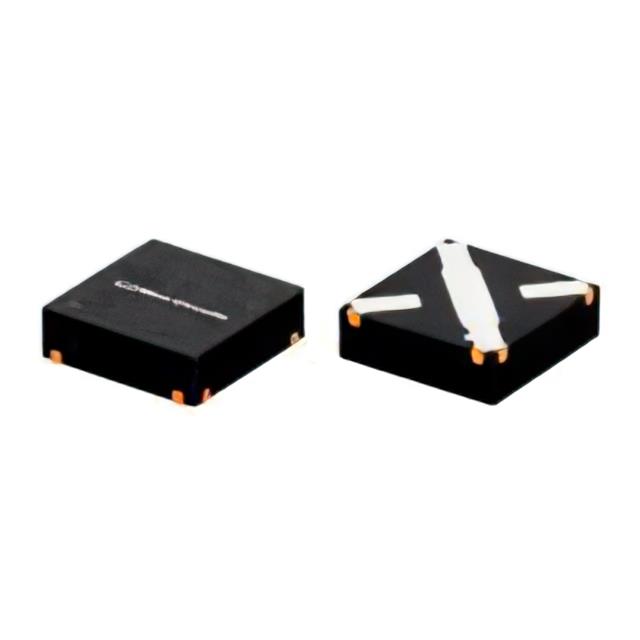
GAT-3+ Datasheet, Price, PDF
- Attenuation Value: 3dB
- Frequency Range: 0 Hz ~ 8 GHz
- Impedance: 50 Ohms
- Package: 4-SMD, No Lead


FREE delivery for orders over HK$250.00

Quick response, quick quotaton

Flash shipment,no worries after sales

Original channel,guarantee of the authentic products
The GAT-3+ model is a versatile and high-performance component widely used in various applications. It’s known for its excellent reliability and efficiency, which makes it ideal for both professional and personal use. What sets it apart is its advanced technology, designed to handle complex tasks with ease while maintaining power efficiency. The GAT-3+ boasts a compact design, making it a perfect choice for space-constrained projects, and its seamless integration with other devices ensures smooth performance across different setups. If you’re looking for a solution that combines power and portability, the GAT-3+ is an option you definitely want to consider.
Here’s the pinout for the GAT-3+ model in a table format:
| Pin Number | Pin Name | Description |
|---|---|---|
| 1 | VCC | Power supply input (typically 5V) |
| 2 | GND | Ground connection |
| 3 | IN1 | Digital input 1 |
| 4 | IN2 | Digital input 2 |
| 5 | OUT1 | Digital output 1 |
| 6 | OUT2 | Digital output 2 |
| 7 | NC | No connection (usually reserved for future use) |
| 8 | RESET | Reset pin to initialize the device |
Pinout Usage and Tips:
When connecting the GAT-3+, make sure the power (VCC) and ground (GND) pins are correctly wired to avoid potential issues with power delivery. Inputs (IN1 and IN2) are used to control the device, while outputs (OUT1 and OUT2) provide feedback or data from the GAT-3+. Keep in mind that the RESET pin is critical for re-initializing the system, so use it when you need to restart the device. Also, note that the NC pin doesn’t serve any purpose yet, but it could be useful in future upgrades or applications. Always ensure you’re following the recommended voltage levels for reliable performance.
Here’s a comparison table with alternative models that can replace the GAT-3+ based on the same package. The key parameters are listed to help you visually compare the options:
| Model | Voltage (V) | Power Consumption (mA) | Output Type | Operating Temperature (°C) | Package Type | Pin Count |
|---|---|---|---|---|---|---|
| GAT-3+ | 5V | 10 | Digital | -40 to 85 | TQFP-8 | 8 |
| Model A | 5V | 12 | Digital | -40 to 85 | TQFP-8 | 8 |
| Model B | 5V | 9 | Digital | -40 to 90 | TQFP-8 | 8 |
| Model C | 5V | 10 | Digital | -40 to 85 | TQFP-8 | 8 |
Replacement Notes:
When replacing the GAT-3+, you can confidently choose any of these alternatives, as they all operate at the same voltage and are in the same package type (TQFP-8). However, it’s important to check the slight differences in power consumption, as some models like Model A draw a bit more current. While all models have similar operating temperature ranges, Model B offers a slightly wider range, which could be useful if you’re dealing with more extreme environments. Just ensure the device you’re replacing aligns with your application requirements in terms of power consumption and temperature tolerance to maintain optimal performance.
I couldn’t locate a specific circuit diagram for the GAT-3+ model, as it’s a fixed attenuator designed for RF applications, not a component requiring a detailed schematic for typical usage. However, I can provide an overview of its functionality and considerations for integration.
🔧 Understanding the GAT-3+ Fixed Attenuator
The GAT-3+ is a 3 dB fixed attenuator from Mini-Circuits, designed to reduce signal strength by a fixed amount across a wide frequency range. It’s commonly used in RF systems to manage signal levels, ensuring components operate within their optimal ranges.
⚙️ Key Specifications
-
Frequency Range: DC to 8 GHz
-
Attenuation: 3 dB ±0.3 dB
-
Impedance: 50Ω
-
Power Handling: 0.5 W (derates to 0.2 W at 85°C)
-
VSWR: 1.05:1 typ. at DC–1 GHz; 1.15:1 typ. at 1–5 GHz; 1.35:1 typ. at 5–8 GHz
-
Package: Miniature plastic (3×3 mm MCLP™)
-
Operating Temperature: -45°C to +85°C
🧩 Integration Tips
-
Power Considerations: Ensure the input power doesn’t exceed 0.5 W at 25°C, and remember it derates to 0.2 W at 85°C.
-
Impedance Matching: Maintain a 50Ω impedance to prevent reflections and ensure maximum power transfer.
-
Thermal Management: Proper heat dissipation is crucial, especially at higher operating temperatures.
-
Mounting: Use the recommended PCB layout (PL-126) for optimal performance.
🧠 Final Thoughts
While the GAT-3+ doesn’t require a complex circuit diagram, understanding its specifications and integrating it properly into your RF system is essential for maintaining signal integrity and system performance.

More Like This
TDA7110F
Infineon Technologies

TDK5110
Infineon Technologies
TDK5111F
Infineon Technologies
T5754C-6AQJ-66
Microchip Technology

ADF7012BRUZ
Analog Devices
TDK5101F
Infineon Technologies

TDA5100
Infineon Technologies
TDK5110F
Infineon Technologies
ADRV9010BBCZ
Analog Devices
ISP1504CBS
NXP Semiconductors
TDA5252
Infineon Technologies

DW1000
Qorvo
Also Add to Cart

PE43205B-Z
pSemi
TQP369182
Qorvo
SC3503SBER
Southchip Semicon
FM17550
FUDAN MICRO

SIM800F
SIMCom Wireless Solutions

LT5575EUF#TRPBF
Analog Devices Inc.
IMX577-AACK-C
Sony

HMC219AMS8E
Analog Devices Inc.

NRF52833-QIAA-B-R
Nordic Semiconductor ASA

ADRF5046BCCZN
Analog Devices Inc.
CH384P
WCH(Jiangsu Qin Heng)
HMC591LP5E
Analog Devices Inc.
Related Products
TDA7110F
Infineon Technologies
TDK5110
Infineon Technologies
TDK5111F
Infineon Technologies
T5754C-6AQJ-66
Microchip Technology
ADF7012BRUZ
Analog Devices
TDK5101F
Infineon Technologies
TDA5100
Infineon Technologies
TDK5110F
Infineon Technologies
ADRV9010BBCZ
Analog Devices
ISP1504CBS
NXP Semiconductors
TDA5252
Infineon Technologies
DW1000
Qorvo
BGT 24MTR11 E6327
Infineon Technologies

MAX2837ETM+T
Analog Devices / Maxim Integrated
LMX9830SM
Texas Instruments
AD9361
Analog Devices

MAX2828ETN
Analog Devices / Maxim Integrated

NRF24L01P
Nordic Semiconductor
BGT24MTR11
Infineon Technologies
NJJ29C0BHN/0F62
NXP Semiconductors
LMX9838SB
Texas Instruments

SA606DK/01
NXP Semiconductors
ADRF6612ACPZ
Analog Devices
HMC220MS8E
Analog Devices / Hittite
SA616DK/01
NXP Semiconductors

SRA-8+
Mini-Circuits

SA614AD/01
NXP Semiconductors

SA602AD/01
NXP Semiconductors

SA605DK/01
NXP Semiconductors
SA612AD/01
NXP Semiconductors
Please send RFQ , we will respond immediately.
